Mailing List


Kevin Brazil
Kevin Brazil is a writer and critic who lives in London. His writing has appeared in Granta, The White Review, the London Review of Books, the Times Literary Supplement, Art Review, art-agenda, Studio International, and elsewhere. He is writing a book about queer happiness.
Articles Available Online


Interview with Sianne Ngai

Interview

October 2020

Kevin Brazil

Interview

October 2020

Over the past fifteen years, Sianne Ngai has created a taxonomy of the aesthetic features of contemporary capitalism: the emotions it provokes, the judgements...

Essay

Issue No. 28

Fear of a Gay Planet

Kevin Brazil

Essay

Issue No. 28

In Robert Ferro’s 1988 novel Second Son, Mark Valerian suffers from an unnamed illness afflicting gay men, spread by...

‘The ruins of Rey are near Tehran!’ exclaimed the wayfarers in Sadegh Hedayat’s dark, opium-incensed novel of 1936, The Blind Owl The fabled city of Rey, razed to the ground by the Mongol hordes in the thirteenth century, is only a short distance from the Iranian capital of Tehran During Hedayat’s lifetime, and in the heady decades leading up to the 1979 Revolution, there were lesser known ruins even closer to home Ruins brushed beneath the bloodstained rug of the last Shah, Mohammad Reza Pahlavi, invisible to the foreign diplomats, heads of state, and celebrities surrounding him, and to the affluent denizens of Tehran’s leafy northern suburbs Shahr-e No (literally, ‘New City’) was a decrepit red light district, and a thorn in the side of a monarch with a penchant for bubbly, caviar, and Warhol To some, places like Shahr-e No were a fact of life, a part of their quotidian existence on the margins of society Others didn’t know they existed at all, and many of those who did, in the spirit of the Pahlavi era, denied such realities with vehemence   Kaveh Golestan was not among their number In the early seventies, while in his twenties, he spent a number of years visiting Shahr-e No, striking up a rapport with its inhabitants Later, between 1975 and 1977, he captured the prostitutes who lived and worked there, in a series of photographs currently on view at Tate Modern’s Boiler House The exhibition is notable for the importance of Golestan’s documentary work – it is also the first time an entire room at Tate Modern has been dedicated to the work of an Iranian artist As well as the women of Shar-e No, the neighbourhood itself is also on display In a vitrine, a map shows a district surrounded on all sides by walls, so as not to prove an eyesore In Golestan’s photographs, the streets are filthy and bare, lined by brick apartment buildings, little aqueducts, and weary merchants   Golestan was part of a small group of intellectuals and artists keenly aware of the disparities between the social strata in Iran

Contributor

March 2018

Kevin Brazil

Contributor

March 2018

Kevin Brazil is a writer and critic who lives in London. His writing has appeared in Granta, The White Review, the London...

Interview with Terre Thaemlitz

Interview

March 2018

Kevin Brazil

Interview

March 2018

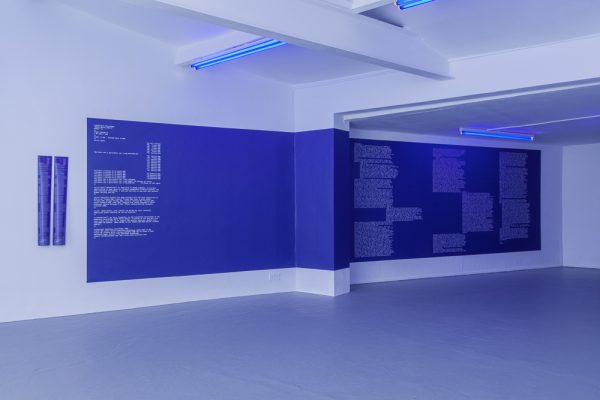
In the first room of Terre Thaemlitz’s 2017 exhibition ‘INTERSTICES’, at Auto Italia in London, columns of white text ran across one wall. Thaemlitz...

READ NEXT

poetry

January 2014

Tuesday Will Be War

Jáchym Topol

TR. Alex Zucker

poetry

January 2014

Jáchym Topol (b. 1962), like most Czech authors of his generation, wrote poetry for years before turning to prose....

Prize Entry

April 2016

clerical error

Victoria Manifold

Prize Entry

April 2016

Due to a clerical error on my part, the current Prime Minister is now living in the box room...

Feature

Issue No. 19

Ill Feelings

Alice Hattrick

Feature

Issue No. 19

My mother recently found some loose diary pages I wrote in my first year of boarding school, aged eleven,...


Get our newsletter


* indicates required