Mailing List


David Isaacs
David Isaacs has recently completed a PhD about the ethics of rewriting at UCL. He is coming to the end of a first novel and is at the early stages of a new project about the present tense.

Articles Available Online


Interview with Namwali Serpell

Interview

December 2020

David Isaacs

Interview

December 2020

Namwali Serpell is a rarity: an academic and novelist whose criticism is as vital as her fiction. Since we first spoke, in September 2020,...

Book Review

June 2018

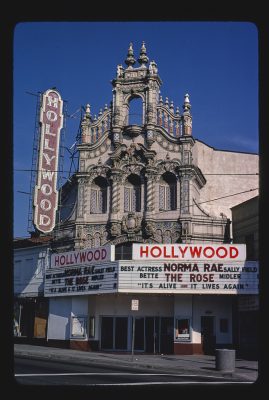
Christine Schutt’s ‘Pure Hollywood’

David Isaacs

Book Review

June 2018

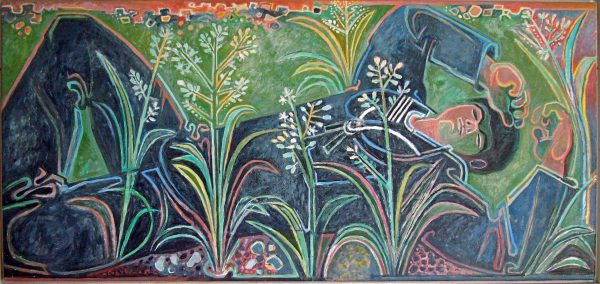
There is a certain kind of American novelist of the late twentieth century whose fiction fetishises plant names. The...

Every project made with a computer expresses a relationship between aesthetics and technology The historical progress of technology works in two dimensions – it allows us to view novel inventions through the lens of existing archetypes, while simultaneously reinvigorating existing art forms with new aesthetic possibilities  It is no accident that the term architecture is used by computer programmers to describe the hierarchical, rule-based logic of code, a world in which the grammar and syntax of a programming language must be obeyed Most of the time, the inner workings of the computer are explained by analogous artefacts drawn from our pre-digital world; the monitor is a solid wall of projected light, the touchscreen is a pen of infinite ink, and silicon-based memory is an extension of our own mind Despite its superficial similarity to the past, the speed and accuracy of the computer has opened up the expressive potential of the fine arts, especially in the realm of geometry   Michael Hansmeyer describes himself as a computational Architect, using processes and methods grounded in the virtual realm to invent new forms of architecture He takes the algorithm – a set of mathematical procedures – and applies it to three-dimensional shapes in order to expand the vocabulary of inhabitable space Where programmers appropriate the language of design, Hansmeyer takes the techniques of computing and applies them to architecture For his ‘Sixth Order’ project, he uses a Greek column as his starting point, continuously dividing and recombining its geometric lines, resulting in a column that is both uncannily familiar and appealingly alien In addition to questioning the how and why of this new aesthetic, the explicit use of the algorithmic process raises issues about the limitations of technological creativity By pushing the limits of the hardware and software hardware they use, architects and artists investigating digital media are more prone to their computer crashing than most No matter how fast a program runs, any computer-based process is prone to the crash, a sudden abrupt halt in an invisible, abstract mechanism The crash is the trickster version of the Deus ex Machina,

Contributor

August 2014

David Isaacs

Contributor

August 2014

David Isaacs has recently completed a PhD about the ethics of rewriting at UCL. He is coming to the end...

Prize Entry

April 2017

Pylons

David Isaacs

Prize Entry

April 2017

Once upon a time, Dad would begin, I think, focusing on the road, there was a man called Watt....

Seasickness

Prize Entry

April 2016

David Isaacs

Prize Entry

April 2016

‘How would you begin?’   She puts a finger to her lips, a little wrinkled still from the water, and hesitates. She says, ‘Maybe:...
How things are falling.

Prize Entry

April 2015

David Isaacs

Prize Entry

April 2015

i.   Oyster cards were first issued to members of the British public in July 2003; by June 2015 they will have been replaced...
by Accident

fiction

April 2014

David Isaacs

fiction

April 2014

[To be read aloud]   I want to begin – and I hope I don’t come across as autistic or anything like that (and...

READ NEXT

Interview

August 2017

Interview with Ottessa Moshfegh

Yen Pham

Interview

August 2017

Ottessa Moshfegh’s first two books are, as she tells me, very different from one another. But despite the contrast...

fiction

Issue No. 6

Stolen Luck

Helen DeWitt

fiction

Issue No. 6

Keith was not the songwriter. Darren and Stewart wrote the songs. Keith hit things, some of which were drums....

fiction

August 2016

Boy With Frog

Kristin Posehn

fiction

August 2016

My first impression was of a tall building laid down for a nap, with all its parts nestled together...


Get our newsletter


* indicates required