Mailing List


Rye Dag Holmboe
Rye Dag Holmboe is a writer and PhD candidate in History of Art at University College, London. He has recently co-authored and co-edited the book JocJonJosch: Hand in Foot, published by the Sion Art Museum, Switzerland (2013). He has recently edited Jolene, an artist's book which brings together the works of the poet Rachael Allen and the photographer Guy Gormley, which will be published later this year. His writings have appeared in The White Review, Art Licks and in academic journals.
Articles Available Online


Art and its Functions: Recent Work by Luke Hart

Art

June 2016

Rye Dag Holmboe

Art

June 2016

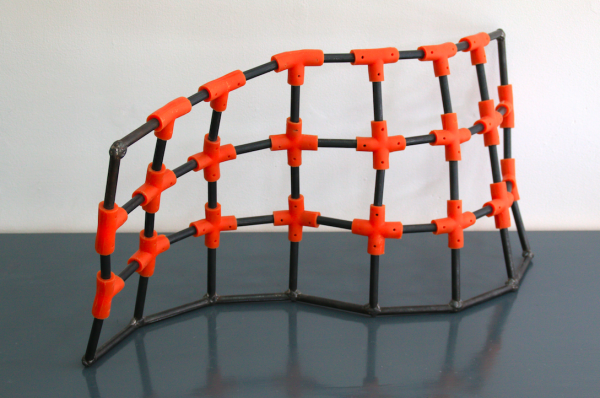
Luke Hart’s Wall, recently on display at London’s William Benington Gallery, is a single, large-scale sculpture composed of a series of steel tubes held...

Art

February 2015

Filthy Lucre

Rye Dag Holmboe

Art

February 2015

White silhouettes sway against softly gradated backgrounds: blues, purples, yellows and pinks. The painted palm trees are tacky and...

1 SAND AND SNOW   He is a warrior prince He hunts in the deserts of central Arabia He drinks and carouses with his companions, and pursues scandalous love affairs When his father banishes him for his bad behaviour, he becomes even more reckless, an outlaw At the news of his father’s death, he shrugs, he goes on playing backgammon Afterwards, however, he gets riotously drunk and embarks on a campaign of vengeance that will absorb the remainder of his short life He is the greatest poet of his age According to legend, he is slain by a treacherous gift from the Emperor Justinian: a poisoned robe   He is Imru al-Qays, the Man of Misfortune, the Wandering King He composes a stunning poem, known as his Muallaqa, or ‘Hanging Ode’, one of a handful of pre-Islamic poems so precious they were said to have been inscribed in gold and hung on the walls of the Kaaba Luminous language, imperishable lines The poem’s opening phrase, Qifa nabki – ‘Stop, let us weep’ – signals a traditional scene, in which the poet surveys the ruins of his beloved’s campsite This trope was already conventional in the poet’s time, produced by a nomadic Bedouin culture: the common experience of coming across the traces of an abandoned camp became, for poets, an occasion for mourning the loss of a real or imagined woman With Imru al-Qays, the old theme finds its most powerful and lasting expression, so that his Muallaqa becomes its exemplar Qifa nabki Stop, let us weep A call to pause, to dismount, to come down to earth, to face the signs of destruction and loss, and to weep in torrents In Arabic poetics, this classical motif is known as al-waqf ala al-atlal: ‘standing at the ruins’   Stop, let us weep for the memory of a lover and a home, at the edge of the twisting sands between al-Dakhul and Hawmal, between Tudih and al-Miqrat The traces have not yet been erased by the weaving of the north and south winds   In the courtyards and enclosures you can see the dung of gazelles scattered like peppercorns   On the day

Contributor

August 2014

Rye Dag Holmboe

Contributor

August 2014

Rye Dag Holmboe is a writer and PhD candidate in History of Art at University College, London. He has...

feature

October 2012

Pressed Up Against the Immediate

Rye Dag Holmboe

feature

October 2012

The author Philip Pullman recently criticised the overuse of the present tense in contemporary literature, a criticism he stretched...

Existere: Documenting Performance Art

feature

September 2012

David Gothard

Jo Melvin

John James

Rye Dag Holmboe

feature

September 2012

The following conversation was held at the Institute of Contemporary Arts, London, in May 2012. The event took place almost a year after a...
Gabriel Orozco: Cosmic Matter and Other Leftovers

Art

March 2011

Rye Dag Holmboe

Art

March 2011

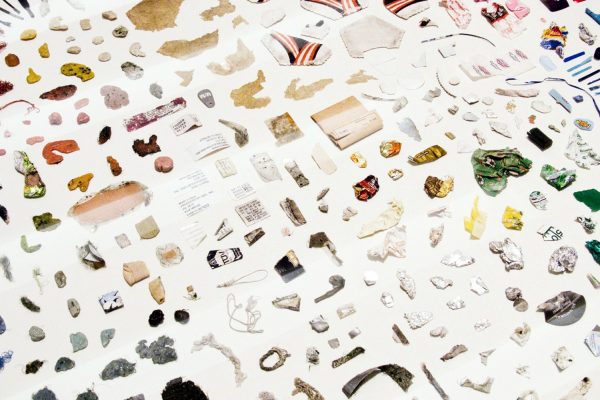
‘To live,’ writes Walter Benjamin, ‘means to leave traces’. As one might expect, Benjamin’s observation is not without a certain melancholy. Traces are lost...

READ NEXT

Prize Entry

April 2017

The Lovers

Devyn Defoe

Prize Entry

April 2017

Everyone who asks questions, asks in some way about love. The question is one half, the answer the other....

fiction

February 2012

A Gift from Bill Gates

Wu Ang

TR. Nicky Harman

fiction

February 2012

My name is Mr Thousands and I’ve worked in all sorts of jobs. Most recently, I’ve been spending my...

poetry

November 2016

Nothing Old, Nothing, New, Nothing, Borrowed, Nothing Blue

Iphgenia Baal

poetry

November 2016

look at your kitchen look at your kitchen oh my god look at your kitchen it’s delightful only wait...


Get our newsletter


* indicates required