Mailing List


Rosanna Mclaughlin
Rosanna Mclaughlin is an editor at The White Review.
Articles Available Online


The Pious and the Pommery

Essay

Issue No. 18

Rosanna Mclaughlin

Essay

Issue No. 18

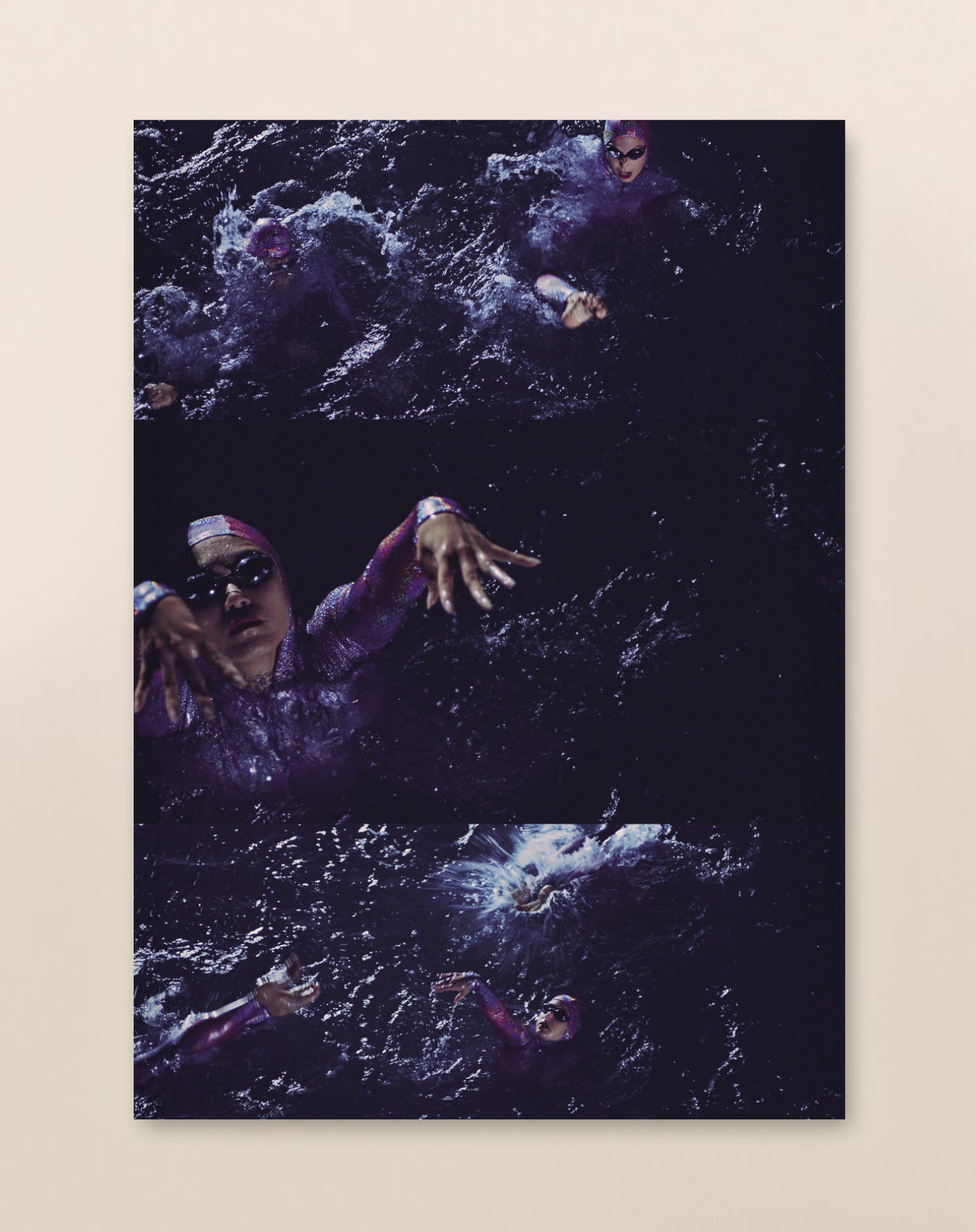
I.   Where is the champagne? On second thoughts this is not entirely the right question. The champagne is in the ice trough, on...

Essay

April 2019

Ariana and the Lesbian Narcissus

Rosanna Mclaughlin

Essay

April 2019

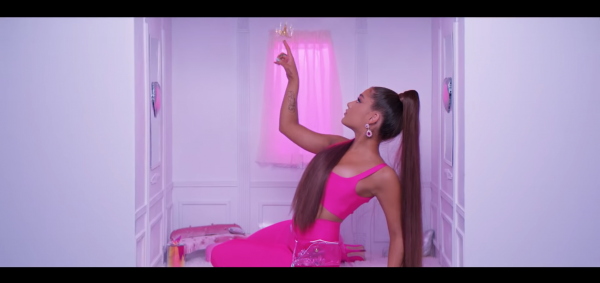
‘Avoid me not!’ ‘Avoid me not!’                                   Narcissus   Let me describe a GIF I’ve been watching. A lot....

Halfway through James Bridle’s foreboding, at times terrifying, but ultimately motivating account of our technological present, he recounts a scene from a magazine article about developments in artificial intelligence The journalist is asking a Google engineer to give an image of the AI system developed at Google The engineer’s response was, ‘I do not generally like trying to visualise thousand-dimensional vectors in three-dimensional space’ A few pages later, discussing the famous example of grandmaster Garry Kasparov losing a series of six chess matches to IBM supercomputer Deep Blue, Bridle quotes Fan Hui, an experienced Go player, describing the Google-developed AlphaGo software’s defeat of professional Korean Go player Lee Sedol at the 2,500-year-old strategy game: ‘“It’s not a human move I’ve never seen a human play this move” And then he added, “So beautiful”’   The first challenge for proving a system’s intelligence is image cognition: AI are trained for facial recognition or to scan satellite imagery Still, technology is not primarily considered a visual problem, even if new technologies’ effect on our lives is the subject of countless movies which are often, to echo Bridle’s title, quite dark Bridle, a visual artist whose artworks consider the intersection of technology and representation, from the shadows cast by drones to the appearance of stock images in public space, does not focus his book on representations of technology, but rather on a different visual problem: invisibility In his introduction, Bridle warns that society is powerless to understand and map the interconnections between the technological systems that it has built What is needed, the artist claims, is an understanding that ‘cannot be limited to the practicalities of how things work: it must be extended to how things came to be, and how they continue to function in the world in ways that are often invisible and interwoven What is required is not understanding, but literacy’   Literacy, in Bridle’s use, is beyond understanding, and is the result of our struggle to conceive — to imagine, or describe — the scale of new technologies A lot of the examples in the book are visual and descriptive, providing new

Contributor

July 2016

Rosanna Mclaughlin

Contributor

July 2016

Rosanna Mclaughlin is an editor at The White Review.
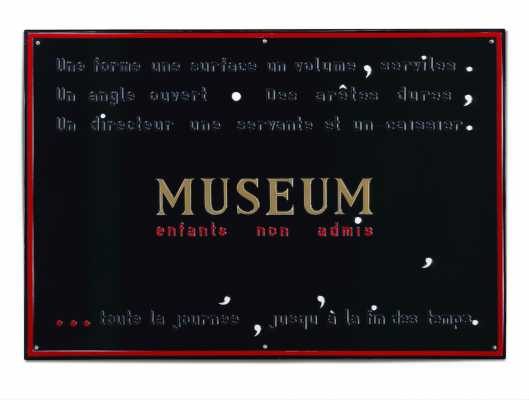
Ten Years at Garage Moscow

Art Review

November 2018

Rosanna Mclaughlin

Art Review

November 2018

When I arrive in Moscow, I am picked up from the airport by Roman, a patriotic taxi driver sent to collect me courtesy of...
Becoming Alice Neel

Art

August 2017

Rosanna Mclaughlin

Art

August 2017

From the first time I saw Alice Neel’s portraits, I wanted to see the world as she did. Neel was the Matisse of the...

READ NEXT

poetry

September 2012

Interview

Cutter Streeby

poetry

September 2012

The first time I think I saw Robinson? I’d have to have been leaving Yucaipa. He was on an...

fiction

June 2017

Ferocity

Nicola Lagioia

TR. Antony Shugaar

fiction

June 2017

A pale three-quarter moon lit up the state highway at two in the morning. The road connected the province...

feature

July 2011

Editorial: a thousand witnesses are better than conscience

The Editors

feature

July 2011

The closure of any newspaper is a cause for sadness in any country that prides itself, as Britain does,...


Get our newsletter


* indicates required