Mailing List


Alexander Christie-Miller
ALEXANDER CHRISTIE-MILLER  is a writer and journalist based in Istanbul. His writing about Turkish politics and culture has been published in Newsweek, the Times, the Atlantic, and other publications. He is a regular contributor to The White Review.

Articles Available Online


Ada Kaleh

feature

Issue No. 17

Alexander Christie-Miller

feature

Issue No. 17

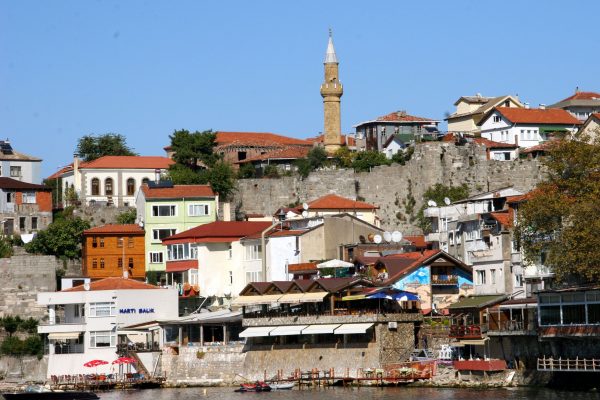
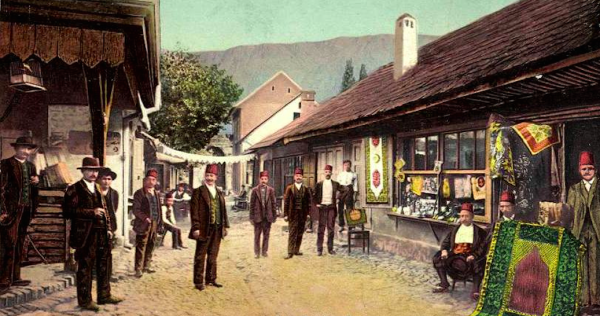
When King Carol II of Romania set foot on the tiny Danubian island of Ada Kaleh on 4 May 1931, it was said among...

feature

October 2015

War is Easy, Peace is Hard

Alexander Christie-Miller

feature

October 2015

At around midday on 19 July, Koray Türkay boarded a bus in Istanbul and set off for the Syrian...

Reading Jesse Ball’s new novel feels like being hypnotised, or like having your heart broken – but really it feels like both at once It’s a dreamlike road-trip of a book, more Kafka than Kerouac, in which a terminally ill widower and his young son, who has Down syndrome, travel across a nameless continent in an indeterminate past They journey from a town called A to a town called Z, taking a bizarre census, marking each resident they encounter with a tattoo But beside or beneath this story – which has the feel of a fable or parable, transpiring outside the specificities of time and place – something else is being constructed: an act of remembrance or restitution   Census opens with – and reading it is framed by – a nonfictional foreword to the meandering fiction that follows In it, Ball explains why he wanted to write the book (‘I felt, and feel, that people with Down syndrome are not really understood’) and how he decided to do it (‘I realised I would make a book that was hollow’) In the opening line, we learn that the book is about – or rather, says Ball, ‘around’, the distinction is important – a real person, on whom the boy in the novel is based: ‘My brother Abram Ball died in 1998’ We learn that Abram had Down syndrome, and that when he died, aged 24, he had been quadriplegic for years As a boy, Jesse assumed that he would live with and care for Abram when they were adults, in a relationship ‘very similar to that of a father and son’, until death intervened The power of Ball’s foreword is connected to the simplicity with which it is written, which, in turn, highlights an irony: that a loved person has died tragically young can be stated in a handful of words, but to express the transformations wrought by that loss would exhaust the capabilities of language One reading of Census is that it offers, or attempts to offer, an artistic consolation for that inconsolable loss It’s the closest Ball can get

Contributor

August 2014

Alexander Christie-Miller

Contributor

August 2014

ALEXANDER CHRISTIE-MILLER  is a writer and journalist based in Istanbul. His writing about Turkish politics and culture has been...

Forgotten Sea

feature

Issue No. 11

Alexander Christie-Miller

feature

Issue No. 11

I. As I stood on the flanks of the Kaçkar Mountains where they slope into the Black Sea near the town of Arhavi, the...
Occupy Gezi: From the Fringes to the Centre, and Back Again

feature

July 2013

Alexander Christie-Miller

feature

July 2013

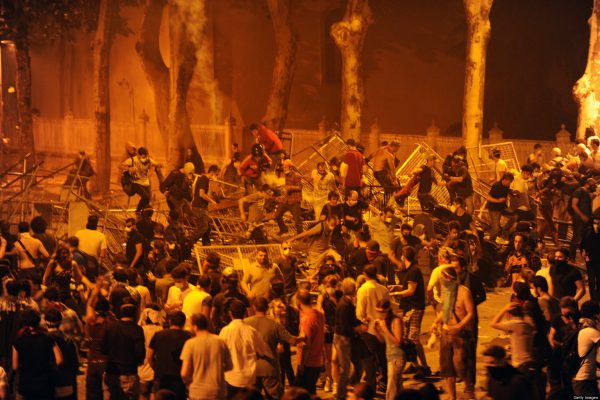
Taksim Square appears at first a wide, featureless and unlovely place. It is a ganglion of roads and bus routes, a destination and a...

READ NEXT

feature

March 2014

Burroughs in London

Heathcote Williams

feature

March 2014

I first met William Burroughs in 1963. I was working for a now defunct literary magazine called Transatlantic Review...

Art

November 2012

7 1/2 mile hike to Mohonk Lake via Duck Pond

Patricia Niven

JA Murrin

Art

November 2012

Notes on a Walk Never Taken by JA Murrin   As a writer I like to visit the places...

Art

February 2014

Starting with a Bang: Hannah Höch and The First International Dada Fair

Daniel F. Herrmann

Art

February 2014

A spectre haunted the Lützow-Ufer – the spectre of Dadaism. It hung from the ceiling and peered down from the...


Get our newsletter


* indicates required