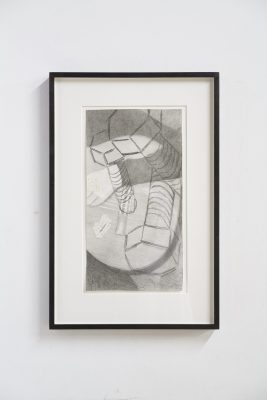
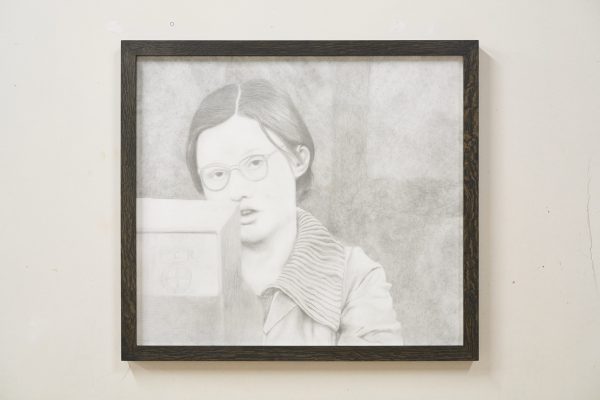
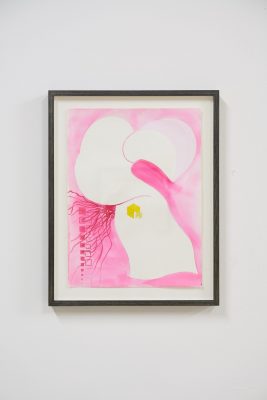
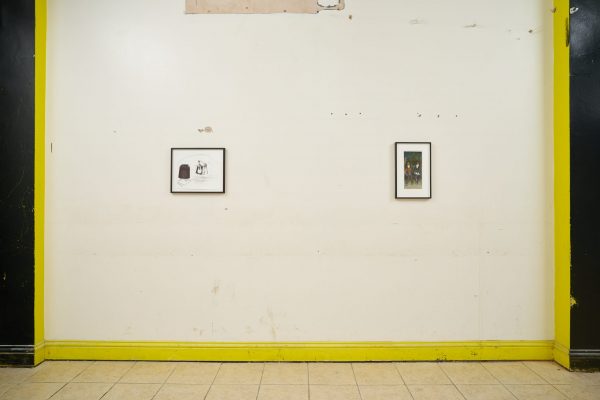
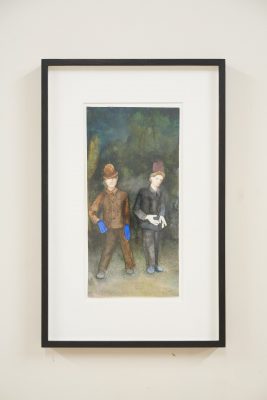
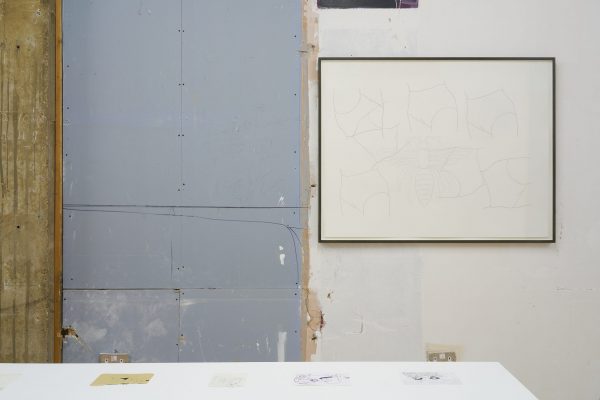
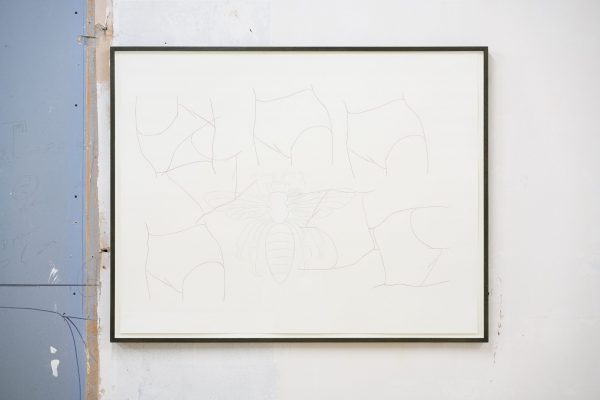
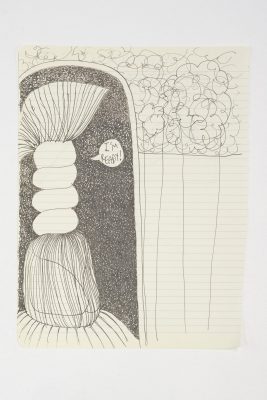
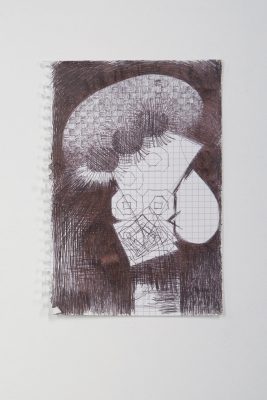
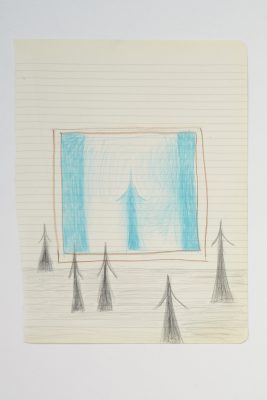
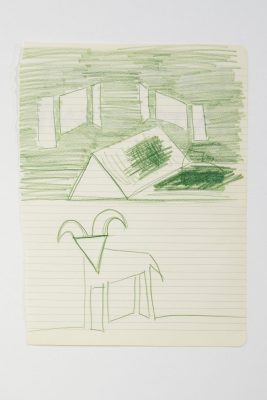
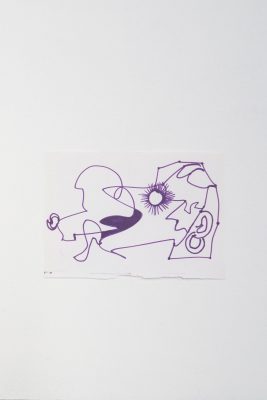
The title of Bonnie Camplin’s exhibition at 3236RLS Gallery, ‘Is it a Crime to Love a Prawn’, brings to mind one of the ‘greguerías’ coined by Spanish surrealist Ramón Gómez de la Serna (specifically that ‘anchovies dream of an olive mausoleum’). Ramón used these surrealist combinations of words to spark disorientating meanings from otherwise ordinary language, and something of the same impulse is apparent in Camplin’s employment of the resolutely unfashionable materials of HB pencil and watercolour paint.
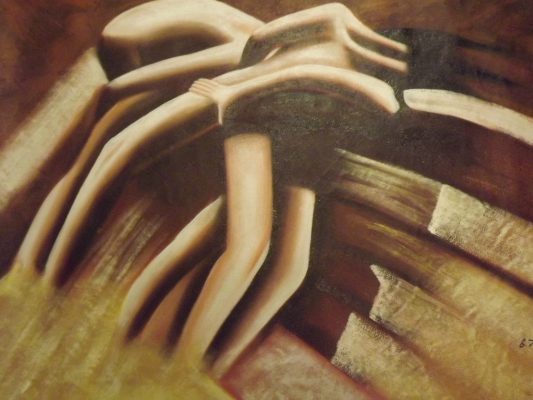
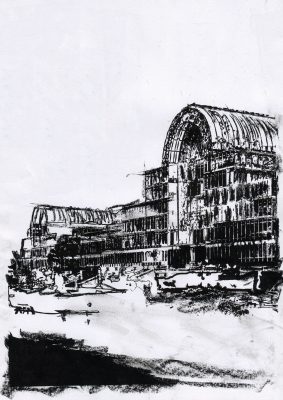
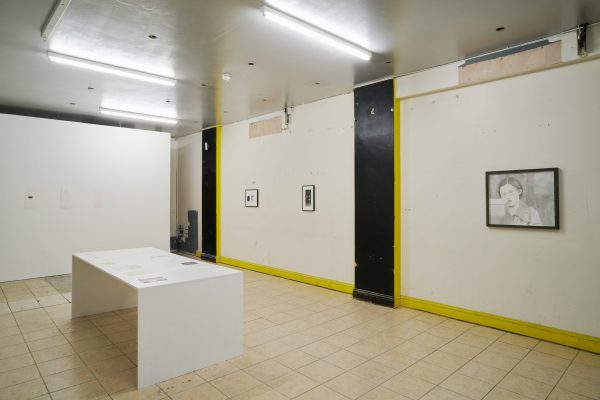
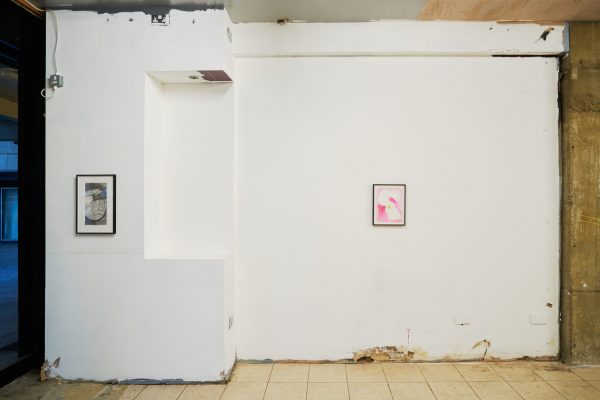
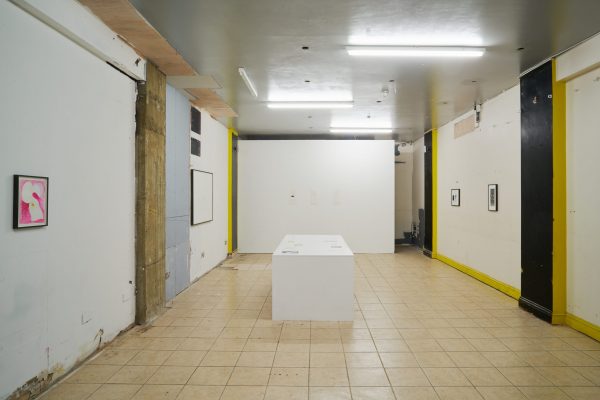
Sparsely arranged around the chipped and variegated walls of the gallery, these deceptively complex images combine easily legible forms and figures in unsettling ways. Camplin’s wide-ranging practice – which has previously found expression in film, performance, music and writing – takes as its starting point our subjective experience of the world, and it is tempting to read this exhibition’s shifts between highly wrought figuration and scribbled expressionism as oscillations between interior and exterior, what we see and what we feel. However interpreted, these curious works momentarily reacquaint us with the essential strangeness of our existence, caught between the real and the imagined.
Bonnie Camplin’s ‘Is it a Crime to Love a Prawn’ runs to 18 December 2016 at 3236RLS, London.