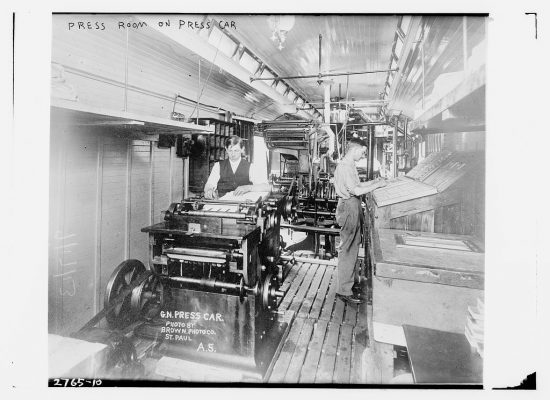
In the course of putting three issues of The White Review together, the editors have been presented with the problems they were previously so apt to discuss in abstract terms.
How are the responsibilities of an editor changing? How should an editor engage with a writer or artist, helping to shape or develop their work without impinging upon it? As an editor, to what extent should one agree with the arguments being proposed in the course of an essay, or should the editor’s role be entirely objective? How is it possible (is it possible) to curate a variety of individual works, of different modes, styles, forms and expressions, without sacrificing the overall coherence of each issue? We, after much discussion (at dinner tables and elsewhere…), cannot answer these questions. They are technical, mechanical issues, to be addressed by editors, in a small room, surrounded by paper.
As to the role of the editor, we continue to be guided by two certain principles. We hold that a writer or artist can succeed without their work ticking boxes devised by marketing departments. These we classify as writers and artists deserving of greater exposure. Equally, we believe that there exist readers eager to escape the pigeonholes of taste ascribed to them. We are confident that both groups are sufficiently populous to support the existence of a journal such as ours. The role of the editors is to introduce one to the other on the best possible terms.
Variety – the quality or state of being different or diverse; the absence of uniformity or monotony – is key to this enterprise. Other publishers operating today – CB Editions, Dalkey Archive Press, Melville House, Go Together Press, And Other Stories – are doing this admirably. The success of The White Review depends on our ability to further this tradition, nothing more.